The Things We Do For Love: COURAGE THE COWARDLY DOG 20 Years Later

Exploring the children’s show that wasn’t crafted for children with COURAGE composer and head writer.

Samantha Vargas | Fangoria

Jody Gray understood John Dilworth’s vision before he even submitted a trial composition for Courage the Cowardly Dog back in 1998. After watching the short that inspired the series, The Chicken from Outer Space, Gray knew exactly what to do to gain an advantage over the competition. “[Dilworth] didn’t want it to be like a kid’s cartoon at all. He wanted us to score it cinematically, like it was a horror movie,” Gray, one of the show’s lead composers, said. “We were encouraged to do the darkest, craziest stuff that we could possibly imagine.”

courage fred.jpeg

Courage premiered on Cartoon Network at the end of 1999 and ran for almost three years. The series followed Courage, the titular skittish, pink dog, and the lengths he was willing to go to protect his owners from supernatural forces on their farm in the middle of Nowhere. His owners, Eustace and Murial, were the face of middle America, living on their desolate farm and acting as lightning rods for danger, seemingly walking into trouble everywhere they went. But it was always up to Courage to rescue them. The premise of the series was the perfect foundation for its 11-minute horror-comedy episodes. Twenty years after its finale, fans see it as a cult classic, and many of those behind the show believe it exists in the DNA of a generation of new animation artists and horror creators.

Every horror fan has core memories dating back to their childhood, and while many of these memories involve peaking through their fingers at R-rated movies they were too young to see, children’s media is no stranger to introducing younger generations to the genre. With its elevated cartoon violence and malicious villains, Dilworth didn’t want his show to look anything like the genre’s predecessors. In fact, the award-winning animator told his team not to treat the project like it was a children’s show at all. Between its storylines, animation style, and score, Courage made every effort to thoroughly and genuinely scare its viewers.

From its inception, the show stood out alongside the network’s frontrunners like The Powerpuff Girls, Johnny Bravo, and Dexter’s Laboratory. While its main characters remained flat, often sporting muted colors, the backgrounds and textures of the show were vibrant, adding a foreboding depth to the environment. But when it came to the monster of the week, like Benton Tarantella or Katz, Dilworth knew how to play with proportions and coloring to make each character uniquely off-putting.

courage discontent.jpeg

The series would mix visual mediums, combining traditional animation with jarring effects like CGI or live-video integration. Fans reference episodes like “The House of Discontent,” which features a disembodied head, or “King Ramses’ Curse,” which showcases disturbing CGI, as the nightmare-inducing imagery of their youth. Certain episodes even reference some of the horror genre’s most iconic performances like The Exorcist and Sweeney Todd, which certain members of the creative team say inspired fan-favorite villain Freaky Fred.

“So many of the episodes were a parody or homage to certain horror or science fiction movies. It’s hard to point at a horror great that didn’t influence us at some point,” David Steven Cohen, the show’s head writer, said. “Everything I’ve ever experienced influences everything I write. I was a sponge for TV and movies growing up.”

But its visuals weren’t the only factor contributing to the show’s iconic horror. Gray worked alongside fellow composer Andy Ezrin to compose each episode from scratch, only reusing 10 percent of each season’s musical cues. The duo is responsible for scoring everything from an 11-minute opera in the episode “The Ride of the Valkyries” to a recurring egg shaker cameo. Gray credits avant-garde techniques for the series’ unique score and A Clockwork Orange as one of his main compositional influences, often choosing to create a score that worked in opposition to the show’s visuals similar to the film’s visceral sexual assault scene.

courage King-Ramses.jpeg

Still, Courage managed to pack so much more into its episodes than the occasional nod to a famous film or disturbing CGI visual. The series had a clear message to its young audience: that fear isn’t a weakness.

Although Courage may be “cowardly” in response to many of the situations he encounters, he still has the “courage” to confront those that threaten his family. Courage’s fear, although sometimes unfounded, allows him to be vigilant over those he cares about rather than framed as a neurotic obsession.

And some of the more relatable aspects of the show were a lot darker than others, especially when it came to Courage’s abuse. Although each episode featured a new villain for Courage to face, the biggest, consistent threat he had to endure was the torment from his own father figure, Eustace; who would constantly berate Courage, referring to him as a “stupid dog” and then intentionally terrifying him. Despite all the villains and monsters featured throughout the series, Cohen believes that Eustace’s role is the scariest.

Courage-the-Cowardly-Dog.jpeg

“At the heart of it, I think the scariest thing for most people is having the people closest to you, the people that are supposed to love and take care of you, actively trying to get rid of you and make your life worse,” Cohen said. “It was never about the villain of the week. [Eustace] was trying to get rid of Courage at every turn, and that has to be scarier than any monster.”

Courage’s ability to stand in as the representation of a child creates an unsettling dynamic. Cohen adds that he’d channel his own fear of his parents fighting when it came to these show elements.

“The horrors from my childhood are reflective of the horrors that fans have discussed with me. I never really thought about it before, but I know that I drew on it at an unconscious level,” Cohen said. “I’d hide in my room, away from the fights. Probably just as much as pop culture, [my contribution] to Courage is partially autobiographical.”

courage stitch.jpeg

But, despite all the malicious intent, Courage always seems to let villains redeem themselves. The show bases itself on empathy and understanding, making the scariest monster more tolerable – even if it doesn’t seem warranted. Even Eustice’s abusive behavior is eventually explored, shedding light on the trauma from his abusive mother. The show manages to balance its frightening atmosphere with deeper storylines, which Cohen says let its young audience cope with the complexities of fear.

Courage was unique. I’m sure it’s influenced a lot of people. I like to think that the show is in the DNA of many of the new people who work in this business,” Cohen said. “A lot of times the influences are so subtle, you can’t notice them. Those are the best kinds of influences.”

courage.jpeg

The series took the idea of introducing fear to kids a step further, trading the training wheels of horror for visceral animation and disturbing storylines. It’s shown generations of kids that it’s alright to be afraid but also important to have enough courage to protect yourself and those you care about. Because at the end of the day, that’s the thing you do for love.

“You may think there’s a monster, an irredeemable beast, and maybe there are those in this world, but there’s a reason they’re that way. You’re given the moment to explore that,” Cohen said. “When you have empathy for your opponents, the person victimizing you, the person hauling you off to the circles of hell, it’s not an easy lesson.”

How nostalgia for old Abercrombie ads fueled HUNNY’s latest Homesick EP

Samantha Vargas | Alternative Press

For Kevin Grimmett, the bassist/keyboardist of HUNNY, the band’s musical journey has always been about getting in touch with their feelings the moment they happen — or at least that’s how they ended up writing nearly 100 demos during the pandemic. And today, they’re finally ready to open up the vault by releasing their new EP, Homesick, along with a campy, satirical music video. Equipped with heavy, guitar-forward instrumentals and vulnerable lyrics, HUNNY are tapping into the essence of early West Coast pop punk.

Although the group say their songwriting process changes with each track, Grimmett, along with Jason YargerJake Goldstein and Joey Anderson, have spent the last eight years crafting their unique sound. Reminiscent of modernized surf rock, the group blend synths and strong basslines to create sunny melodies. And the nostalgia doesn’t end with HUNNY’s sound. The group also satirize vintage ’90s-era Abercrombie ads with their video release for “Homesick.” Touching on the idea of yearning for a forgotten past, Yarger takes on the role of a washed-up model, posing alongside beautiful people who would be printed on the side of shopping bags in malls throughout the country.

Read more: Meet Pool Kids, the Hayley Williams co-signed indie-rockers who went through hell to make their new record

With a new year ahead, HUNNY get to look forward — instead of back — on the release of their new EP. Grimmett took some time to reflect on the creative process that brought the group from sea level to the top of the charts. For a group that seem to long for the past, they have a bright future.

So, you released your first EP only three years ago, and you’ve been pushing out new music super consistently ever since — is this the direction you saw yourselves going in way back in 2014?

We’ve always loved the idea of smaller, more frequent releases. It’s more fun for us if there’s less distance between creation and release of projects, and hopefully more engaging from a listener’s perspective. If anything, we’re always trying to release things more quickly, but life and bureaucracy get in the way.

You mentioned you’re trying to “get to the root of music that [you] want to make at this point,” but how would you describe that musical vision in your own words?

Really, I think we’re just getting in touch with what made us interested in playing music and specifically playing in bands in the first place. Right now that looks and sounds like loud guitars and honest lyrics. Beyond that, the rest is serving each song.

When it comes to your new EP, Homesick, it sounds like a lot of the songs touch on this idea of yearning for something — obviously with “Homesick” and “Speed Dial.” Is that going to be a throughline in the album?

Generally, these are themes that have been coming up super organically in both the songs we’ve written in the past and the songs we’re currently writing. Whether it’s nostalgia for a time you can’t get back, wishing that the future would meet you in the present or the desire for something more material outside of your control, I think they all share an emotional sweet spot that’s one of our favorites to tap into.

The songs I’ve heard from the new EP are reminiscent of ’90s and early 2000s West Coast pop punk. Have you always been drawn to this sound?

It’s definitely been a major touchstone for us forever. Growing up in Southern California, the tone and melody of that music are hard-wired into your brain from the moment you’re born. We really actively tried to bring it to the forefront starting with Y5, but it’s always been at the core of what we do.

What were the creative decisions when it came to the music video? Did it have anything to do with the documentary White Hot, which came out recently?

Nostalgia for that time period really seems to have captured the zeitgeist at the moment. When we discussed the treatment with our director, Mason [Mercer], it really struck me how there’s a lifestyle aspiration that came along with those brands, and also how outside of that vision we are, and how the juxtaposition of the two would make for a truly great visual. At once yearning for something, and at the same time condemning the idea it should be wanted for at all.

renforshort is prioritizing mental health more than ever on Dear Amelia

Samantha Vargas | Alternative Press

For rising artist renforshort, there’s a price to pay for constantly jumping between her hometown of Toronto and Los Angeles for work — namely a lack of sleep. But 20-year-old Lauren Isenberg, who woke up for this interview, wouldn’t have it any other way — and that impressive work ethic doesn’t just come from her Taurus sun and Gemini rising.

Read more: Leah Kate: “By the time I was 5, I wanted to be a pop star”

After finishing up a quick tour with the Band CAMINO, the alt-pop singer-songwriter played a packed show at Toronto’s historic Danforth Music Hall the night before, a tribute to the place she used to call home. But nostalgic memories of The Six aren’t the only thing on Isenberg’s mind. With her debut album, Dear Amelia (out July 8), and a newly announced tour, the young artist is pushing the vulnerability of her music and message around mental health further than ever before.

This is your first interview with AltPress, but with nearly 1 million monthly listeners on Spotify, you certainly aren’t a new artist. How would you describe the sound and the vibe you’ve tried to curate for potential new listeners?

I’d like to believe my music is relatable to a lot of people. I really prioritize putting my emotions into words, all while having a fun, guitar-forward sound. I want to have a good mix of relatable lyricism and modern sounds. It’s a real party. As someone who didn’t necessarily feel heard or seen in the media while growing up, I just want to give people what I didn’t have. It’s super cathartic to write down how I feel and just push it out, and I think a lot of the pop music I’m hearing today is super positive and happy. I want to show that vulnerable, honest music is just as important. 

You mentioned in another interview that you came from a musical family, and you were sort of a theater kid growing up. Do you hear any of that musical lineage in your own work?

My parents always wanted their kids to be involved in music — all three of my brothers are also talented musicians. It started as a hobby when I was younger and just blossomed into my passion. I had always loved being onstage and singing. I would write songs on the piano about how I felt, which is where a lot of my first few singles were conceptualized. I’m really just so grateful for my parents’ influence.

Do you have any early memories of performing that really stick with you?

Around ninth or 10th grade, I used to go to open mic nights all the time. Every Tuesday after school, my mom would bring me and my friend, Evan, and we would perform — it was the best night of the week. One night, Evan couldn’t make it, but I was super determined to play an original song. That meant I had to play guitar and sing onstage alone. I remember getting up there and being so nervous. It was like time had totally stopped. I managed to get through the entire thing, and everyone was so excited. That’s when I realized, “Oh, I’m OK at this. This is something I can do.”

So, I know you’ve had a number of singles and EPs, but in terms of recent releases, you’re coming off Teenage Angst in 2020. How would you say you and your music have changed since turning 20 and no longer technically being a teenager?

To be fair, I just turned 20 within the last few weeks. So, I haven’t really written anything since no longer being a teenager. A big pivotal moment for me was when I turned 18, but my writing has always matured with age. When I switched to “adulthood,” it really felt so much different. Although nothing really changed physically, how I viewed the world and how I viewed myself changed. For a long time, it felt like I was too young for so many topics, and then as time went on, I started to really have this understanding around being authentic to myself and my feelings. Especially after being in the industry for so long, I realized I could do whatever the fuck I wanted with my music.

I’m told that your new album, Dear Amelia, coming out July 8 is about mental health, which is a huge subject to tackle in 2022. How have you approached such a personal project?

The first songs I ever wrote were always about [mental health]. Growing up, the most constant feeling I had was thinking that there was something wrong with me — that there was something different about me. Meanwhile, it’s so common to struggle with these issues. All of my projects have been about mental health, so it just felt right to continue that idea with this project. That’s my “thing,” that’s my topic. Over these last few years, my mental health has taken a massive decline, which I didn’t even think was possible. This is so present in my life right now [that] I really can’t write about anything else without sacrificing authenticity. 

Who is Amelia?

Amelia is a lot of people — she’s basically the personification of parts of my brain. I put a lot of stress on myself because I’m not good at communicating my feelings outside of music and tend to bottle them up until I’m at my breaking point. At that point, I can’t even understand those feelings myself. So, [the album] is basically an analogy for being open about your feelings and not keeping it inside because that’ll really destroy you. [Amelia] is also based on real people in my life that I’ve lost to suicide. She’s like this two-in-one character, but I feel like we’re best friends.

How would you like to see the conversations surrounding mental health go in terms of people interacting with your new project? Is there a specific message you want people to take away from it?

Don’t be afraid to talk. Talking is the best thing you can do. One of the biggest parts of this project is our “Letters to Amelia” initiative, which is where you write down everything you’re feeling and mail it to Amelia. All of the letters are discarded for anonymity, but it’s a great way to get these things off your chest — sort of like a warm-up for therapy and talking about your issues. I felt so much better in terms of my own mental health after talking about it. And I know it’s not going to cure the problem, but collecting resources and having a support system is just so good for you.

You also have a tour coming up for the album. Can you tell us a bit about that?

We’ve planned a pretty big North American and international tour that I’m so excited about ⁠— excited but nervous. It’s going to be a lot of fun, and I’m so ready to play this album live. I’ve been on tour for the past two months [with the Band CAMINO], and I’ve really learned a lot, but now I’m ready for the next step. I couldn’t tour at the beginning of my career because my first EP came out when the lockdown was announced. So, I had this huge headliner tour that I had sold out and had to cancel. I’ve had so much time to prepare, and I’m ready to give it my all. Every show is better than the last.

FOR FANS OF: Maude LatourChappell RoanGatlin

SONG RECOMMENDATION: “moshpit”

Zella Day turned her own abortion story into song with “Radio Silence”

Samantha Vargas | Alternative Press

On June 24, Zella Day was set to release her new single “Radio Silence,” a pro-choice anthem that shared the intimate details of her own life-threatening, unintended pregnancy. But instead of relishing the day as another musical milestone and a preface to her upcoming album, Sunday In Heaven, Day woke up to the news that the Supreme Court had voted to overturn Roe V. Wade, which federally protected a woman’s right to have an abortion under the constitution.

In the deeply personal indie-folk track, Day’s chilling vocals recount the emotional distress of finding out about the pregnancy alongside an emotionally unavailable, unempathetic partner. “I love how you told me to calm down,” she sings. “How could this happen to me?”

Read more: Phoebe Bridgers, Olivia Rodrigo, more react to the end of Roe V. Wade

After a weekend of processing the news and sharing resources for women across her social media platforms, the singer-songwriter called AP from Alabama ⁠— one of the 13 “trigger states” to enact restrictions on abortion following the ruling ⁠— to discuss her new song and her personal relationship with a woman’s right to choose. 

You weren’t expecting the Supreme Court to make their ruling the same day as your song was released. What’s been going on in your mind through the weekend?

I was so surprised that the song came out on the same day that the Supreme Court made the decision. Usually, with any type of trauma, my response is to get really quiet and introspective. So, in terms of the song, I haven’t really felt super passionate about promoting it, even though it’s very topical. I’ve just been reading and spending my time reading the news, and really trying to grasp exactly what’s happening, and what the next steps are for our country.

Do you have any plans to attend any of the protests?

Yeah, I actually have attended a couple of protests in Austin already. I’m out of town now, but when I get back, I have some groups that I plan on working with who are organizing and marching.

What was the energy like at the events you attended?

It was definitely more controversial. I’m from California, so I’ve been to plenty of rallies and marches [there]. And it always feels like everyone is on the same page. [The protest in Austin] was the first time I’ve been in a situation where you had right-wing counter-protesters. They’re using intimidation tactics to really scare people to get off the street. I hadn’t really experienced anything like that before.

You mentioned not expecting the song to drop the same day as the verdict. Do you see it changing the impact of the song?

Music and songwriting should be used as a form of healing — whatever it is you need at the time. And so, yes, the song is about my experience in having complications with the pregnancy. It was when I had to make a really important choice for my own sake. At the time of writing it, I could have never guessed that this would actually be the reality that we’re standing in today. I’m really grateful that the song has come at a time where it can contribute to the allyship. And I’m hoping that it resonates with anyone that needs to hear a story among so many stories that desperately need to be told right now in a time like this.

What was your experience with your own unintended pregnancy?

[Back when I was 24], I had complications with an early term pregnancy. I was given the choice to decide how I wanted to move forward with my body. I had an ectopic pregnancy, and I was really scared during the whole experience. In the end, I ended up not having as much of a choice and went into an emergency surgery. 

So, at the time, you were put into a life or death situation?

I couldn’t have imagined being more powerless than I already was. My body was doing something that I didn’t really have much control over. The only sense of security that I had was to be able to make a decision to really dictate what would happen with my future. And it really is scary to think that that choice is no longer a guarantee when you’re in that kind of clinical situation — or any situation for that matter.

Obviously, the song reads as pro-choice, and you’ve been very vocal on social media. But could you share your personal stance on abortion and the pro-choice movement?

This is the first time in history where a constitutional right has been added and retracted. And I feel like everyone should be concerned about a federal law that encourages equality being stolen away from the people. I’m deeply saddened when I think about how much pain and suffering women have already gone through, and the impact that this is going to have on so many. I really believe we deserve better. 

carolesdaughter: “Music saved me; music gave my life purpose” – Print interview

Samantha Vargas | Alternative Press

carolesdaughter has a lofty goal for the new year: bringing back music videos on MTV. Equipped with the nostalgia-heavy visual for her single “Target Practice,” Thea Taylor is ready to take on any television executives who stand in her way.

While many TikTok stars might not even remember a time when MTV played music videos, Taylor has spent her life developing a taste for only the finest art. Which is why her visual references classics such as Buffy The Vampire Slayer and Veronica Mars. But living as her authentic self came with years of bullying and isolation. Now, as her viral song “Violent” hits over 120 million streams on Spotify, she’s reclaiming the power from her tormentors who definitely peaked in high school.

Read more: Alice Glass and carolesdaughter on taking control of their own stories, tease collab

With a new year ahead, Taylor is looking forward to the release of her own EP and opening for nothing,nowhere.’s spring tour. The up-and-coming artist reflects on overcoming addiction, the importance of Flyleaf and being genuine to yourself.

Your work really blew up on TikTok. How does it feel to know that people can see so much potential in you and the music you’ve put out?

It felt really great. I just felt like I could be a good influence in some ways. I think the appeal is that so many people can relate to me. It feels like there was someone like me missing. I didn’t have any artists I could look up to and be like, “Wow, I want to be just like them.” There just wasn’t someone like that. I couldn’t look up and see anyone that was pierced and tattooed and a strong woman who actually had something to say. 

“Violent,” which references an abusive relationship, and many of your other singles talk about traumatic moments in your life. Can you tell me about the meaning behind your latest song, “Target Practice”?

The song is really special to me because everything I write comes from my own experience. This song is about someone who’s living a double life — going to school and trying to fit in and trying to find your place in the world. But at the same time, it’s almost about knowing that you have a better purpose in life. The whole target practice concept is just essentially bullying or people taking shots at you. It’s like the anthem for the kids that didn’t peak in high school. 

You attended five different schools before dropping out, right? Was it the bullying that eventually led to you leaving school?

I probably attended more than that. Honestly, I just say five because that’s a nice number. I switched schools every couple of months. It was mainly just me leaving to go to treatment or rehab and then coming back and not wanting to go to the same school again. I didn’t keep a lot of friends in high school, and I was just the druggie people only knew for two months.

Was that when you started leaning into the mall-goth subculture?

I’ve always been interested in the world of punk and goth and hardcore. I would consider my style a combination of a lot of subcultures. I was raised Mormon, so I wasn’t allowed to look the way I wanted to look for a really long time. I had to fight tooth and nail to have my septum pierced or dye my hair black.

What was the transition like? Did you go to Hot Topic and buy the band tees and magnetic piercings? 

I pierced my septum when I was 13 and gave myself little stick-and-pokes that my parents flipped over. It was just a natural progression of [being] an angsty teen. My mom would always go through my clothes and throw out stuff she didn’t like. 

What about with this new kind of music after growing up Mormon? Was there any crossover with secular rock like Flyleaf? 

I absolutely loved Flyleaf, but music, in general, has always been the only thing that matters to me. So, I ended up listening to everything. I still love stuff like the Carpenters, and the Bee Gees are one of my favorite bands of all time. I went on Reddit and found music recommendations, and I’ve just checked out pretty much everything. I got really into Björk because of my older sister. I just love art. Music is just such art to me, and the weirder, the better, in a lot of ways.

You’ve talked about people commenting that your aesthetic doesn’t fit your sound and that they expect you to lean more into the hardcore scene. Do you see yourself experimenting with different genres?

I feel like I shouldn’t be put in a box for my style. I can make whatever type of music I want, and I’m still punk. I’m still goth. Just because I don’t make that type of music doesn’t mean I’m not a part of that community. I want to make this cool, weird music, and I do. It’s just mostly on my SoundCloud. But the new music I’m coming out with has very emo vibes. I’m really excited for people to hear it.

Does that mean you’re coming out with an album soon?

I’m coming out with an EP [within the next year], but I’m really excited for that. I feel very strongly about it. I just feel like it’s genuinely me. It’s really hard to navigate the music industry when you’re just thrown into it, but I feel like this EP is from a significant part of my life. I wrote all the songs when I was in treatment for my drug addiction, and it’s just super raw. They’re from the literal bottom of my heart.

You’ve been super vulnerable with all the music you’ve been putting out. Do you have a vision for yourself as you move forward?

I plan to be the most authentic and genuine I can be. I do have a good message to send. I am just such an advocate for recovery in all ways. I’ve struggled with a lot of things. I feel like there are not people out there who want to talk about it in an honest way. Even my name, carolesdaughter, it’s just a tribute to how I never thought I would have an amazing relationship with my parents, but it can happen. Everything can be OK. Music is the thing that saved me. Music is the thing that gave my life purpose. If I didn’t talk about that, if I didn’t share how I felt in the past, that would be stupid of me.

This story appeared in issue #403 with cover star Dominic Fike, available here.

For Dora Jar, working as a musician is akin to being a wizard— Print interview

Samantha Vargas | Alternative Press

Before you find yourself in her DMs, Dora Jar already knows that her name is a pun. She’s reminded about it at least once a week. And just like with her eclectic sound, she references her childhood for its inspiration.

While some might not feel a nostalgic connection to an automated car alarm, Jar makes a point to appreciate all the little things in life — whether it’s a scab on her knee, taking photos of lumpy trees or singing along to Into The Woods. Now, she can add rising stardom to the list. 

This past year, Jar released her debut album, Digital Meadow, and has already gained fame across the music realm. Mixing indie-rock and electronic-pop elements, the up-and-coming artist believes that knowing your own power and owning your wizarding potential can open up any door.

Read more: glaive talks next album and finding growth by seeing more of the world
While you’ve been making music since high school, you’ve only really released tracks this past year. How does it feel to have so many people in the industry looking at you as a rising star?

The industry’s a new thing for me. So it’s exciting, and I just appreciate the love. It just feels really great to be seen for what I do and what I’ve been doing for a long time. It’s exhilarating, honestly.

You have superstars like Elton John and Wheatus shouting you out. How does it feel to know figures like that are championing you so early on?

It’s crazy. I sent the clip to my mom when Elton John played “Scab Song” on his radio show, and she didn’t know it was [him] speaking. It’s hard to believe since he’s such a legend. Actually, he’s a really special person in my life because he used to fund a scholarship for the school that my sister went to: The Bridge School. One of our family friend’s son used to get a Christmas card from him every year. He was just a big part of my family — a hero.

I saw that your mother worked in musical theater. Did your family always know that you would follow in her footsteps in the arts?

I think so. My family’s really kooky. I was never really an academic student. I was always really into theater, and music was always a part of our household. I knew [early on] that I didn’t really care about anything other than performing and creating and obsessing over Gwen Stefani and Foo Fighters and Mary J. Blige.

Did you watch a lot of your mother’s work as a kid? And how much of that musical theater lineage can we hear in your work?

My dad would always play the Beatles, but [my mom] would play Stephen Sondheim musicals. It was his lyrical genius and humor and crazy melodies that just made me obsessed with music. [Sondheim] made it so much deeper than just a song; it was a story. Musical theater has always been a staple in my sound. I used to reject that when I was [making music] in high school because it was too close to home, and now I’ve regained that appreciation and acknowledge that influence.

Your taste in music ranges from these classic musicals to Nirvana to Outkast. Where do you find the most inspiration for your sound? 

It changes a lot. I think everything from childhood is my reference point. I have all this music ingrained in me. Whenever I’m writing on the guitar, I know Foo Fighters is an obvious influence, especially the album In Your Honor. Then I’ll go through periods where I don’t really listen to anything for a while. That’s when I write the most.

Theatrics must run in the family considering your eclectic personality and online presence, especially your determination to be a wizard. Where did that all start?

I had found this photo from my first-grade Halloween the day I wrote [“Wizard”]. I had worn a wizard costume and had gone over to my friend’s house. We were sitting at the table with her big scary older brothers, and they were making fun of us and our costumes because they were too cool to dress up. I remember just feeling really defiant and thinking, “You guys have no idea who we are because you don’t even care.” Those feelings just started coming back when I saw that picture. I started thinking about how we all have these inner magical worlds and different hats that we put on, and different ways that we feel powerful. Something about keeping it low-key and knowing your own power is how that song came about.

Would you consider the role of a musician that of a wizard, in a sense?

Everyone refers to [producers] as wizards regarding technical skills. I think wizard skills are mind power and world-building and swag. That’s what music’s all about. So, it’s definitely a wizard realm.

You were able to use that mind power to create your alter ego, Polly. Would you say that you see yourself channeling her moving forward, or do you plan to go in a different direction with your new project? 

Polly is always with me. She’s the version of me that’s more confident and will try new things. When I’m onstage, she definitely comes out. I’m releasing new music in late winter, and it’s another sharp left turn for me. There are so many different characters that I’ll put on. It’s just like the Into The Woods musical. I just want to be every character from the play.

As someone who seems so transformative and free with their work, where do you see yourself and your music traveling to in 2022? 

My [new project] has a bit more acoustic roots. It’s more in the meadow world and less in the digital world. I don’t want to say too much since it’s still crystallizing. If Digital Meadow was [a] burst of daytime, this next album is like a darker, twilight, woodier land.

Are you a goal-oriented person, and are there any you have for the near future?

I’m more of a dream-oriented person. I’ll dream up the idea of how I want to feel and how I want my life to feel and how I want to be connected, but then I’ll take it week by week on how to get there. I’m planting a lot of seeds for the future with imagination and dreams.

This interview first appeared in issue #402 (22 for ’22), available here.

Director Jonathan Cuartas talks family, culture, and horror

Samantha Vargas | Zobo With A Shotgun

When it comes to filmmaking, it can be difficult to craft stories that resonate with a wide audience. Luckily for filmmakers in the horror landscape, the concept of fear transcends culture and language. 

Director Jonathan Cuartas’ first feature-length film My Heart Can’t Beat Unless You Tell It To took the prominent horror trope of vampirism and used it to create a story about the complicated nature of familial responsibility and personal sacrifice. The film acted as an exploration into his family’s experience with codependent relationships following his grandmother’s time in Hospice care. Cuartas recently sat down to discuss the importance of family, his complex relationship with horror, and going back to his Latinx roots.

S: You mention how you took inspiration from experiences with your own family, specifically with your grandma in Hospice, and I also saw that you mentioned wanting Guierrmo Del Toro to see the film as a Latinx filmmaker: How do you think coming from a Latinx family has impacted the end result of the film?

J: I think – particularly with my family being Colombian – family kind of dictated everything for us. Especially in my immediate family – my parents and my two brothers – we’re so close knit, even today. I think that being around family and loving my family drives me because that’s my identity. What makes it more fun is when I get to tell these stories with them, too. Instead of just being inspired by them, I got to shoot the film with my brother as the cinematographer and had my dad work as the production designer. It’s just really comfortable and fun.

S: It’s got to be great having such close knit relationships with people that are already in the industry, especially when starting out.

J: Yeah, it’s a tough industry. When you have people that are talented, but that you can also trust with your life, that’s very monumental. I know that my brother’s always going to be there for me in-and-out of film, and it just feels like I can trust him with anything. I can show him any script or ask him any question, and he’ll always be there. It’s almost like working with another director. We’re just best friends, it’s like we operate with one brain.

S: Do you think it was a big jump to take this very personal story and put a horror spin on it for you and your family?

J: Honestly, not a lot of my family has seen the film yet. I think they’re just proud in general, like whenever my mom sees anything about it she just cries. It’s probably just over the fact that we made it, it probably could’ve been sh*t and she’d still cry. I know it resonates with my dad because when he tells his siblings about it, he always mentions how it relates back to our family. He’ll explain how it has to do with our family dynamic, and how it was such a strange and tumultuous time with my grandmother. But it’s nice that that’s what unifies us. Even though my family doesn’t like horror movies and they certainly don’t like arthouse movies, the film still has the backbone that connects back to family.

S: You mentioned your family doesn’t like horror, does that mean you were the black sheep in terms of film preference? Have you always been drawn to that side of filmmaking?

J: Not really, I mean I used to be so scared of horror movies when I was younger. I didn’t really grow up watching all the classics. It’s a little embarrassing to admit but I just saw Alien (1979) this year. I think my inspiration is more shaped by storytelling itself. I was always drawing and creating, so there was almost like this urgency to tell stories regardless of the medium. Now that my fears have matured and I’m more afraid of death and existential questions, I think [horror] is a way to explore these ideas. It’s more fun, too. If I was going to just tell a literal story about Hospice, I think it would be more bleak than my film. Peppering the story with a subgenre – like vampirism – makes it a little more fun and more digestible when talking about tragic subjects.

S: Now that you’ve worked within these tropes, do you expect to pursue similar styles of [horror] filmmaking moving forward?

J: Yeah, I think a drama-horror fusion is where I feel comfortable. I definitely want to push my heritage and my culture a little bit more. I was inspired by an event that happened recently, so my next film deals with Colombian immigrants. It’s almost all in Spanish, but it’s still working within the confines of horror. In this case it’s using possession, but it’s using possession to talk about assimilation and the horrors of coming to America. So, I’m still inspired by my family, but this time I want to really have the representation on-screen. I want to have Colombian actors and be true to the language.

S: Do you have any thoughts on the current representation of Latinx people in the horror genre? A lot of critics cite misrepresentation and poor stereotypes based off of mythos and indeginous culture.

J: There’s certainly a lot of that, but now I’m a horror fan and find myself watching a lot of international horror films. I love Raw (2017) and A Girl Walks Home Alone At Night (2014) and We Are What We Are (2013) – which was a big inspiration for my film. I think [international horror] is really expanding because you’ve got films like Tiger’s Are Not Afraid (2017), which feels so specific to the culture it’s talking about, but it’s still scary and still heartwarming for any audience. That’s the stuff that I aspire to do – being truthful to your culture, but also sharing something personal is something that always resonates with people. I think horror’s in a good place right now in terms of style. It seems like there’s a renaissance of these character-driven horror movies. That’s what I really respond to as a filmmaker.

S: And speaking of character-driven films, the performances [in your film] from the main cast were so good and so compelling. How was working and directing with the cast?

J: It was just really fun. They’re all just so humble, like Patrick is just the nicest guy and is so funny. He’s been in so many movies with directors that have so much more experience than I do, so I was very receptive. It was my first movie, so I did this with the whole crew – I just trusted them. My brother and I were very deliberate with our visuals, and I think that calls to a certain kind of performance. Patrick speaks to that in some interviews where he talks about how being locked into this tight frame allows him to sink into this performance. It was a lot of push-and-pull with the cast. Owen is very imaginative. We got really into his physicality and tried to workshop that. It was fun to really play on set and sculpt these characters because we didn’t have any rehearsal time.

S: Did you expect to get such a good reception following the release?

J: It was certainly a surprise, but we were always hoping for it. It’s been weird since we’ve had multiple releases due to COVID-19. We’ve had a delayed festival run and everything has been virtual, so I’ve been trying my hardest to just stay connected through Twitter and Letterbox. Now that it’s out, it’s relieving to see it padding up and that people like it, so we’re very happy.

S: What should people be looking out for from you?

J: I’m currently writing the script for my next film, and I hope to shoot next year. I’m just going back to my roots and my parents’ roots. I’d like to make a film about Miami, which is where I was born and raised. But it’s always just about what we can do differently, and I’ve never really seen horror done in Miami. I think there’s a lot of space for these stories about immigrants and assimilation and specific cultures, but even more so in the [horror] genre space. I don’t see a lot of integration with those things, so I want to be very specific to culture moving forward. 

[Film Review] My Heart Can’t Beat Unless You Tell It To (2020)

Samantha Vargas | Zobo With A Shotgun

It’s often said that blood is thicker than water, that there’s nothing stronger than familial bonds. Still, there’s no idiom to explain the complicated relationships that arise when your family starts craving blood. For siblings Jessie (Ingrid Sophie Schram) and Dwight (Patrick Fugit), the love they have for their sick brother seems to know no bounds, even if it means committing unspeakable acts to protect him. 

Director Jonathan Cuartas explores the complex nature of familial responsibility in his first full-length feature My Heart Can’t Beat Unless You Tell It To (2020). The horror-drama follows an isolated, reclusive family as they navigate the role of caretaker for their young brother and his mysterious illness. But taking care of Thomas (Owen Campbell) doesn’t just mean trips to the pharmacy or special tutoring, he requires fresh human blood to survive. While Jessie is determined to do whatever is necessary to protect her baby brother, soft-spoken Dwight finds himself questioning whether or not he can continue hunting those around him. 

The film invokes a tense, uncomfortable slow burn as the characters navigate their sense of duty with their underlying desire for freedom. The tone is reminiscent of cult favorites like Dogtooth (2010) and We Are What We Are (2013), both of which explore unconventional, cultish family dynamics. Although the film follows a traditional narrative, the audience experiences a complex sense of self-awareness alongside Dwight, who finds himself fighting against the instability of their livelihood. Dwight, who yearns for experiences beyond his devastating existence, offers a glimpse into the internal battle that comes with sacrificing yourself for your family.

Although the vampire genre may seem oversaturated, especially in the last two decades, the subversion of genre expectations comes across as incredibly intentional and smart. The film never hand-feeds the audience, but rather leaves subtle clues up through the climax of tension. Cuartas masterfully walks the line between the implication of blatant human depravity and supernatural phenomena, leaving the interpretation up to the audience up until the end of the film. This only adds to the disturbing nature of the story, which feels like a journey through disillusionment as the audience questions the reality behind Thomas’s illness. 

Visually, Cuatros offers incredible juxtaposition between moments of dull, mundane nothingness and compelling frames of intense emotion. He utilizes a neutral, brown color palette often accompanied by heavy shadows, which is broken up by moments of blue-toned artificial lighting and the occasional, gorgeous landscape shot. While he relies on stagnant shots, his use of camera focus and lighting is able to amplify moments that would otherwise fall flat. The sound design also contributes to the eerie, disturbing nature of the film, opting for very little background music or narrative sound. While the atmosphere gives the superficial impression of a warm, midwestern home, the nefarious nature of the family’s activities seems to seep into the shadows of every shot. 

While there are definitely moments of disturbing gore, the film primarily functions as a tragedy. The audience knows it’s objectively wrong to prey on the vulnerable, yet there’s an underlying sense of empathy and understanding. This is only elevated by the wonderful performances from Schram and Fugit, who so clearly love their sick brother. It’s a message that’s able to transcend genre barriers because almost everyone can relate to the bittersweet necessity of personal sacrifice. 

Still, there are a handful of moments and performances that seem to drag. Non-essential side characters like Pam, the sex worker that Dwight often visits, seems to give a stunted performance. But these scenes are few and far between, especially when compared to the impressive main cast. While the writing may stumble at moments and feel a bit unorganized, Cuatros is able to maintain its strong, disturbing tone. The actual storyline is always interesting and the characters always feel four-dimensional, which only contributes to the complex empathy one can feel for the whole family. 

My Heart Can’t Beat Unless You Tell It To is a beautifully dark film that’s able to reach unbelievably emotional depths. It’s obvious that Cuartros is a director to watch as his career progresses. He’s certainly got a strong grip on the horror genre, and we’ll be watching out as he continues to sink his teeth in further. 

[Commission] Wallace and Gromit: Curse of the Were-Rabbit Review

Samantha Vargas

Art of Wallace & Gromit: The Curse of the Were-Rabbit

There’s something inherently delightful about beloved television shows and films creating Halloween specials. While the premise of seasonal specials might come off as a quick cash grab, they always seem to harness the nostalgic magic that comes along with the Halloween season as a child. From The Treehouse of Horror (1990-Present) to Scared Shrekless (2010), Halloween specials have a death grip on the throat of western audiences, including mine. But there’s something especially special about Wallace and Gromit: The Curse of the Were-Rabbit (2005).

Wallace and Gromit was a well-known British stop-motion franchise that originated through a number of short films about the dynamic duo. The Curse of the Were-Rabbit is the first feature-length film for the franchise, which inevitably won a Peabody award. The film follows titular characters Wallace (Peter Sallis) and Gromit through a classic horror film satire. The pest control agents are tasked with protecting their town’s beloved vegetable gardens from rabbit infestations, but when they’re faced with a giant, monster rabbit, they have to stray from their usual techniques. 

The film is fluffy, good-natured, and – overall – overwhelmingly pleasant. Wallace and Gromit has been said to have done, “more to improve the image of the English world-wide than any officially appointed ambassadors.” Creator Nick Park is responsible for the sweet-fluff renaissance of British claymation, culminating in fan favorites like Chicken Run, Wallace and Gromit, and Shaun the Sheep. Park has perfected the notion of creating plotlines that sit on the line between having adult-toned conflict and being utterly conflictless. Like Chicken Run, which dealt with the notion of death, The Curse of the Were-Rabbit’s true conflict lies in the potential murder of Wallace at the hands of Lord Victor Quartermaine (Ralph Fiennes). 

Still, the film never comes across as harrowing. The characters are so confident and unconcerned with their situation that the audience never questions the certainty of the conflict. Wallace may be a bumbling, lovestruck himbo, but that doesn’t mean he’s incapable of saving the day. The film presents it’s conflict through a diversion, emphasizing the concern for the vegetables rather than the lives of the characters. While this may seem condescending on a surface level, the framing of the film really placates any adult concerns in terms of physical violence. 

The overall design is really where the film shines. Claymation is a spectacular feat of human innovation, and Park is truly in his bag. The character and set design are so palatable and delightful in every scene. There are moments of lush detail like when exploring Lady Campanula Tottington’s (Helena Bonham Carter) secret garden or in Wallace’s workshop. Yet the basic designs are also warm, welcoming, and pleasant to view. All of the character designs are intricately interesting, coupled with compelling expressions

Still, the pleasantness of the film lulls at times, especially during moments of exposition. There’s only so much good-natured, British culture that one can take, especially when comparing it to modern children’s films that explore more pressing conflicts. But perhaps that’s taking a condescending, cynical approach to the framing of media. Wallace and Gromit is a classic franchise, even if it doesn’t tackle complex issues.

[Film Review] Flashback (2021)

Samantha Vargas | Ghouls Magazine

Image 1.jpg

At one point or another, everyone wonders if they’ve made the right choices with their time. Every decision, regardless of how big it may seem, can impact the future. Horror directors have often used the concept of time as a vehicle to explore the fear of the unknown because, unlike so many of our favorite movie monsters, time can’t be stopped – or so we believe.  Director Christopher MacBride capitalizes on this fear with his film Flashback (2021), a film that will have you questioning every decision you make.

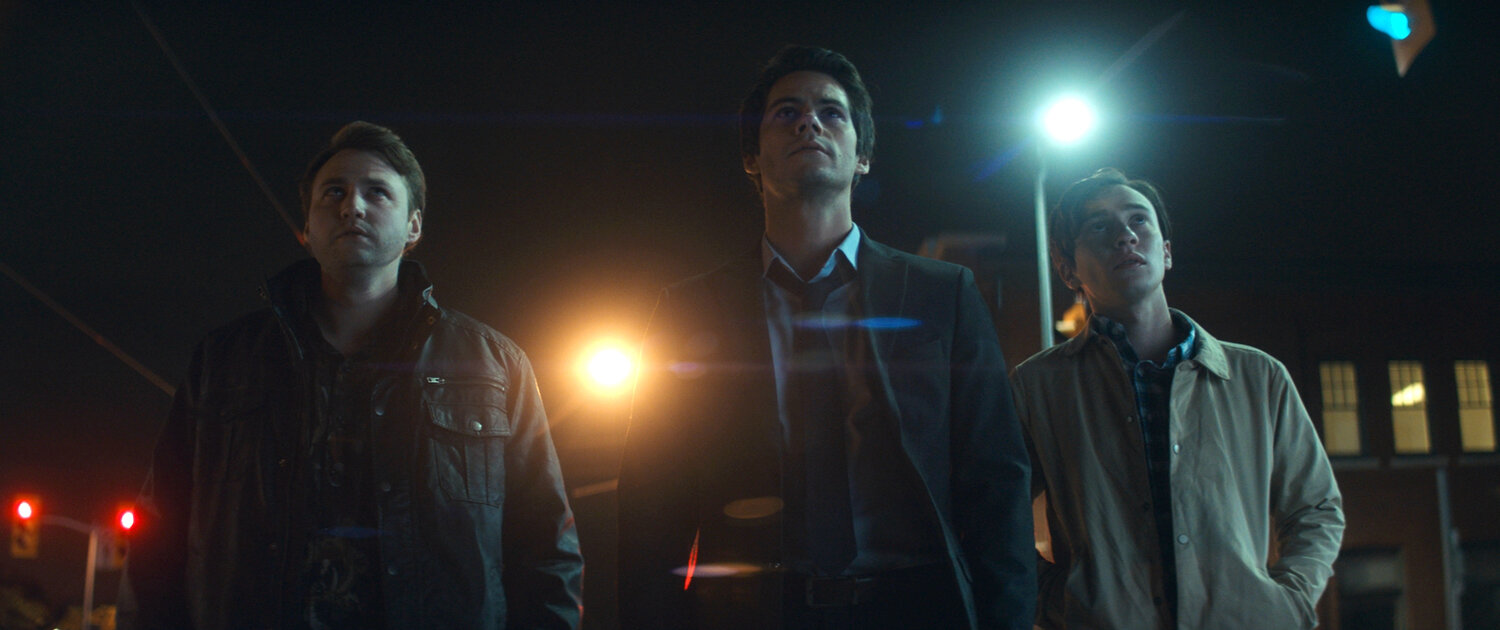
When Fred Fitzell’s (Dylan O’brien) seemingly perfect life is interrupted by violent nightmares about a girl that had disappeared from his high school and his memories, he decides to investigate his own drug-filled past. But as Fred begins to look deeper into his former life, he realizes that everything around him may not be what it seems. Flashback is science-fiction, psychological thriller that asks the audience what they might do if given unlimited chances to redo their choices.

Image 2 (1).jpg

The film is split between two arcs; the first follows a linear story as Fred revisits old friends and places from his past on his quest to find Cindy (Maika Monroe). The second half of the film is where the pacing starts to shift. When Fred begins to recollect his experience with the recreational drug, Mercury, his world stops – literally. That’s because Mercury isn’t a drug that causes euphoria or hallucinations, it’s a substance that allows the user to move through time and space. When he finally finds Cindy, who has been indulging in the freedom of exploring endless alternate realities, he embarks on a bender that allows him to explore all of the different livelihoods he could’ve experienced.

MacBride, the writer and director, take plot cues from cult favorites like The Butterfly Effect (2004), Limitless (2011), and even The Matrix (1999). While the logic behind the plot is relatively straight-forward in regards to time jumping, the film relies heavily on visuals to convey the idea of time and place. It’s definitely the kind of film that requires multiple viewings to understand because it’s not explained outright. While many of the visuals are interesting, the editing is one of the strongest aspects of the film. It masterfully creates compelling juxtapositions between shots to show jumps in time. Stagnant shots and standard cuts would show a much different, far more boring portrayal of this story. 

Image 3 (1).jpg

Dylan O’brien carries the film with his portrayal of Fred, which is sure to help rid him of his mid-2010’s teenage heartthrob perception. The role is  intense and performed at high energy for almost the entire runtime. He’s able to relay information and emote relatively well without much expositional dialogue. The rest of the cast gives mixed performances ranging from compelling manic pixie dream girl portrayals to laughable afterschool-special bullies. Still, since the film predominantly follows Fred and his journey, the supporting characters don’t necessarily take too much away from the film. 

Unfortunately, bad acting isn’t the only downfall of the film. While the plot might seem unique and intellectually-complex, there are long stretches of dialogue and explanations that come off as incredibly pretentious. There are scenes between Fred and Cindy that are set-up to be insightful, meaningful moments that come across as the vapid babbling of any high school stoner. These scenes really detract from the film, taking away any of the abstract meaning that could be found in these delicate conversations. 

Image 4.jpg

There are two moments near the end of the film that feature an obnoxious interpretation of an objective visual for Fred’s movement through time and space. While it’s clear that they wanted this to be one of the peaks of action, it also comes off as pretentious and unnecessary. The team chose to use aggressive strobe lights over what looks to be a video of a nebula, which is also cut with ambiguous flashback scenes. These segments are jarring and create a halt in the tension of the film. They’re drawn out for far too long and make the entire film significantly longer than it is. 

While the film might be aesthetically appealing and have an interesting plot, it falls short of becoming anything significant compared to the other genre films from which it was inspired. Although this may fall off to the side as a generic mid-tier film, it’s clear that there’s strong potential with MacBride as a director and O’brien as an up-and-coming star. Hopefully they continue to make the right choices – or they may end up down the rabbit hole, too.